Wednesday, September 17, 2014

Farmers´ Market & Pasta with Rapini and ground Pork (Rübstiel Pasta mit Hack und Parmesan)


We are in the middle of September and around here there are quite a few Farmers´ Markets meriting a visit. One particularly nice one is in the town of Burscheid, a mere 25 kilometers from Cologne. We have been faithful visitors for a few years now.


Burscheid is a small town in North Rhine-Westphalia, Germany, with less than twenty thousand inhabitants. It is near to the major cultural centers of Cologne and Dusseldorf.


The quaint little town is known for its beautiful town center with its marketplace and churches and the beautiful slate houses. The settlement was first mentioned  in a historic document in 1175 and was granted town privileges in 1856.


So when the late summer sun was shining on Sunday, we paid a visit to the market (now in ist 18th year) to shop for some wonderful local vegetables and regional products, such as the wonderful rapini („Rübstiel“) – recipe will follow below - kohlrabi ("Kohlrabi") and lots of carrots ("Möhren").


These big light-orange pumpkins ("Speisekürbis") caught everyone´s attention.


And we admired the huge, loosely layered, crisp, curling leaves of the so-called butter cabbage („Butterkohl“). This cabbage is a type of savoy cabbage („Wirsing“).


It is a light-green fall cabbage with attractive, crinkled leaves, a mild flavor and a rather robust texture. It is exceptionally good for use in cooked dishes. It is almost impossible to find anywhere these days – unfortunately, due to a certain lack of consumer demand, farmers do not really plant it anymore.


Who can resist buying way too many of these summer squash ("gelbe Zucchinis") and courgettes ("grüne Zucchinis") of many different sizes and colors. And wonderful Hokkaido squash ("Hokkaido Kürbis") - later in the week,  I will enjoy making a velvety Hokkaido squash soup with a dash of Spanish smoked paprika.


Many different kinds of honey from a local beekeeper who also sells honey candy to soothe your throat and sweet mead ("Honigwein"). And will dispense with lots of helpful advice as to all the different uses of honey.


You could taste the different varieties of honey to your heart´s content - the offerings included light yellow runny honeys, dark brown forest honey ("Waldhonig"), and light-yellow, thick rapeseed honey ("Rapshonig").


And so many lovely flowers to choose from, such as these white and purple perrenial pansies ("Stiefmütterchen").


Or you could plant these dark, velvety, purple pansies in your autumn garden. It is not too late for planting these yet.


Sunflowers ("Sonnenblumen") look particularly nice in the late autumn sun. They seem to have a golden glow and will certainly look beautiful in one of those big vases at home.


Fruit brandies and liqueurs such as apple or pear liqueur („Apfelbrand, Birnenbrand“) and strawberry, currant, raspberry, apple and pear brandies („Erdbeer-Likör, Johannisbeer-Likör, Himbeer-Likör, Apfel-und Birnen-Likör“).


And a lot of lovely fruit juices ("Obstsäfte") – apple, rhubarb, or sour cherry, to name but a few.


Fresh berries from a local blueberry farm ("Blaubeeren").


Jams ("Marmeladen") and jellies ("Gelees") and fruit molasses ("Apfel- und Birnenkraut").


Freshly-picked late season blackberries ("Brombeeren") - I bought two packages. Since my lemon verbena is still producing many fragrant leaves, I baked a Blackberry-Bundt with Lemon Verbena ("Brombeer-Gugelhupf mit Zitronenverbene") with these (recipe can be found here).


And those wonderful Italian plums („Zwetschen“) - perfect for baking my beloved fruit-ladden, old-fashioned Plum Torte ("Pflaumenkuchen") with a hint of cinnamon and vanilla (the recipe can be found here).


From the looks of it, all visitors to the market seemed to be enjoying themselves.


The bell tower of the local church providing a very pretty backdrop for the event.

**************

Now that you brought your farmers´ market loot home, it is time to get cooking with some of the produce, such as the slightly bitter rapini ("Rübstiel"). This autumn rapini does not keep very long, maybe a day, but only if you wrap it well and store it in a cool place. It is definitely at its best the day it was harvested.


Creste di Gallo with Rapini and Ground Pork - Rübstiel Pasta mit Hack und Parmesan
(serves about four)

Ingredients for the Pasta and Sauce
  • sea salt (for boiling the pasta and the rapini)
  • 2 bunches autumn rapini (about 500 grams each), cleaned and roughly chopped
  • about 1⁄3 cup extra-virgin olive oil
  • 500 grams freshly ground pork
  • 4 spring onions, cleaned and sliced
  • 4 cloves garlic, sliced very thinly
  • 1 tbsp. dried oregano (preferably Italian)
  • 400 grams pasta (such as "Creste di Gallo", you can use any smallish type of pasta that will suit this type of sauce)
  • some freshly grated lemon zest (organic, please)
  • some shaved parmigiano reggiano (or other hard cheese)
  • fine sea salt and freshly ground black peper to taste


Preparation of the Pasta
  1. Bring a large pot of salted water to a boil. Add rapini and boil until crisp-tender, about 4 minutes. Using a slotted spoon, transfer rapini to a large bowl of ice water and chill. Drain rapini, pat dry, and set aside.
  2. Heat oil in a large skillet over medium heat. Add ground pork. Cook over high heat to color the meat, breaking up any lumps with the back of a fork. Drain the pork, discard any fat. Wipe skillet clean.
  3. Heat more olive oil in the skillet over medium heat again. Add spring onions and garlic and cook, stirring occasionally, until golden, about 3 minutes. Add oregano (run it through your fingers while adding, to release the essential oils)  and cook, stirring frequently, for 30 seconds. Add rapini, toss. Add browned meat, toss again and remove pan from heat; set aside.
  4. Meanwhile, bring a large pot of salted water to a boil. Add pasta and cook until al dente, about 8 minutes, or according to package instructions. 5. Drain pasta (keep a good cup of the pasta water for thinning out the sauce)and transfer pasta to a colander. Drain.
  5. Toss the pasta with the sauce to combine, add some of the pasta water to the sauce to let all the ingredients come together to make a lovely sauce.
  6. Grate some lemon zest over, garnish with a few shavings of parmigiano reggiano and season with salt and pepper to taste.
  7. Divide pasta between bowls/plates and serve immediately.


The slightly bitter rapini marries well with hearty ground pork, the oregano and the wonderfully salty parmigiano reggiano in this dish. If you are looking for another layer of flavor to add to this dish, why not infuse a bit of godd-quality olive oil with herby from your garden, some garlic and lemon and drizzle a bit over the finished pasta - heavenly.


Shopping at a farmers' market is a great way to meet local farmers and get fresh, flavorful produce and feel good about the food you are preparing.


Friday, September 12, 2014

French Fridays with Dorie - French Lentils


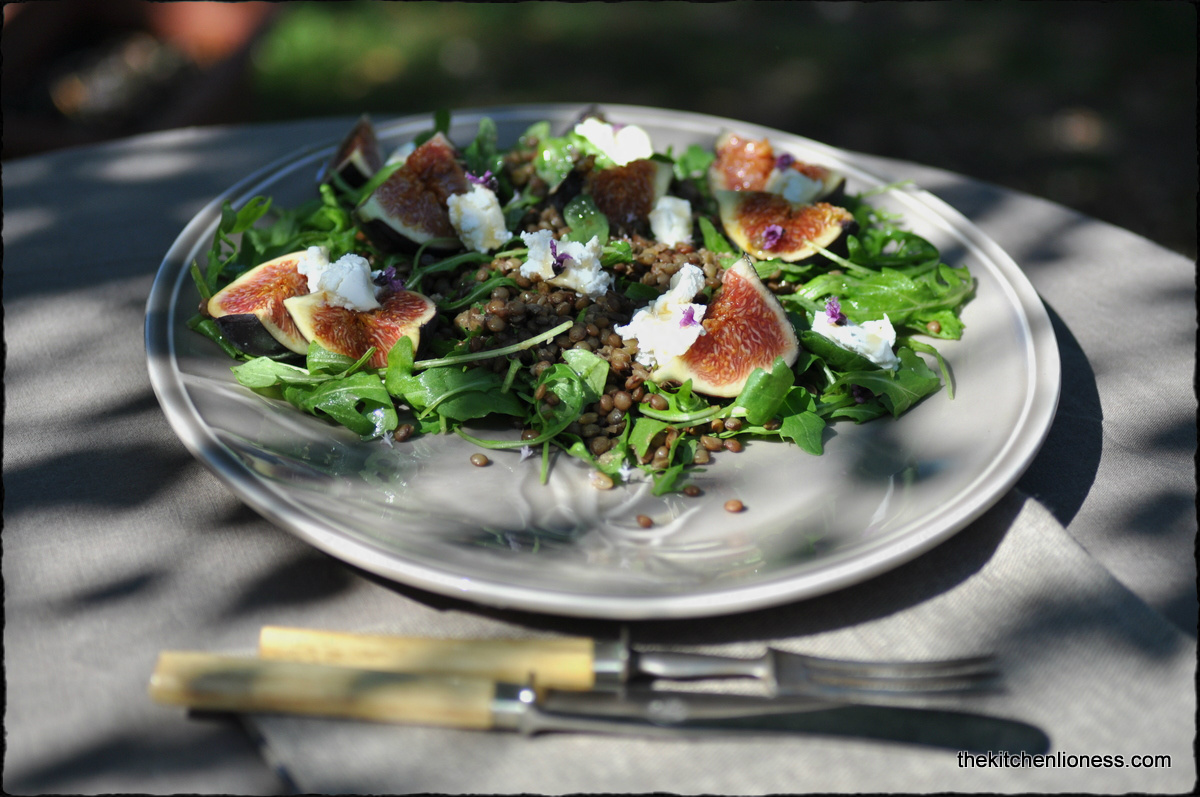
Today´s recipe for the French Fridays with Dorie group is „French Lentils: a basic recipe“. Lentils are versatile, nutritious, and very tasty, and there are many different ways to serve them. Unlike dried beans they do not need soaking and they cook relativley quickly. Before I started making this „basic recipe“ for lentils, I decided to use Dorie´s recipe as a basis for a fresh, late summer salad, a Lentil Salad with fresh Figs, Goat´s Cheese, Rocket and Honey.


Of the widely available types of lentil, Dorie´s recipe calls for „Puy Lentils“ or „lentilles vertes de Puy“, a small slate-green lentil with a delicate blue marbling. Puy lentils are considered by many to be the best lentil because of their distinctive earthy flavor and incomparable nutty texture and the fact they hold their shape during cooking. They are the only lentil to be identified by area of cultivation (Appellation d'Origine Protégée) – grown in Puy-en-Velay,  France. Puy lentils can be served hot or cold as a salad starter or as an accompaniment to poultry, meat or fish dishes, or can be used in soups or casseroles.


The first step in this recipe is the cooking of the lentils. Before you get started, give them a good wash, to get rid of any starchy dust. To infuse these lovely jewels with a lot of flavor, the lentils need to be cooked twice, once only briefly in water, the second time with garlic, onion, carrot, celery stalk, a clove and a bay leaf – all in a homemade chicken broth. The Puy lentils only needed to cook for 25 minutes and ended up having a lovely texture and holding their shape really well, even after mixing them carefully with the optional vinaigrette, the second step for this recipe.


The vinaigrette consisted of Dijon mustard, apple cider vinegar, walnut oil (which goes so well with earthy lentils), extra-virgin olive oil, sea salt, freshly ground black pepper and a bit of local runny honey. Once the lentils are cooked and drained and while still warm, it is also the right time to add the rather well-seasoned dressing – your lentils will soak up the flavors beautifully. Now let the dressed lentils sit for a while, then toss with fresh rocket and finish with quartered figs, goats´cheese and a drizzle of honey.

This is a good recipe to be using that lovely local, runny honey that you bought at the farmers´ market - once a bit in the vinaigrette, then to drizzle a bit over the figs and the goat´s cheese to finish the salad. And as far as the goat´s cheese is concerned, goat's cheese is, of course, a very varied product. For this recipe, try to get a fresh, unpasteurised cheese that is light and soft, which tastes lovely tossed together with the rocket. Or, if you prefer, get a goat´s cheese that crumbles like feta.


Overall,we absolutely adored the Lentil Salad with fresh Figs, Goat´s Cheese, Rocket and Honey. Dorie´s  basic French lentil recipe is a fabulous, flavorful basis for this wonderful salad that combines the earthyness of the Puy lentils, the peppery taste of the rocket, the creaminess of the goat´s cheese, and the sweetness of the lovely fresh figs and honey – absolute delight on a plate – could not ask for more on a late summer´s day.


To see how much the other members of the French Fridays with Dorie group enjoyed this recipe, please go here.

For copyright reasons, we do not publish the recipes from the book. But you can find the recipe for the “French Lentils: a basic recipe“ on pages 367-8 in Dorie Greenspan´s "Around my French Table".


Monday, September 8, 2014

A Visit to Antwerp (Belgium) - Part III - Antwerpse Handjes & Philip´s Biscuits


The City of Antwerp, Belgium has got many nicknames and I was told that one of them is "Koekenstad" or "la Ville des biscuits", literally meaning "Cookietown".


There is an excellent artisanal bakery in Antwerp, called "Philip´s Biscuits". The bakery calls itself "De Koekebakker van de Sint" (Cookie Baker for Saint Nicolas). Saint Nicolas, or Sinterklaas, of course, is the Dutch equivalent of Santa Claus. On December 6th, he delivers toys, chocolate, cookies, and fruits to all children who were "good, polite and helpful" the last year.


The bakery carries many cookies such as Amandelspeculaas (Speculoos cookies with pepper, cinnamon, ginger, cloves, cardamom and nutmeg topped with almonds), Moriaantjes (tiny, crunchy and sweet),  or Pain à la grecque (sweetened bread, coated with a layer of pearl sugar and brushed with simple sugar syrup), Gevulde Speculaas (layers of spice cake with a marzipan filling) and Palmiers (puff pastry cookies). But there is also homemade Marzipan (which you buy as a roll) and different types of Honey-Spice Breakfast Cakes, to name but a few. 


Philip De Corte (hence the name of the bakery), founded the bakery in 1995. It is located on a busy street where many shoppers pass by. Along the walls of the tiny bakery, you will see quite a few vintage wooden speculoos molds, some rather large, some smaller and with more intricate detailing. Upon entering the bakery, you will immediately notice the distinct smell of freshly baked cookies and spices. It is indeed a bit magical - a world away from the hustle and bustle on the busy streets of the city. While you wait in line (which can be rather long), you will be able to taste some of the fresh cookies, as there are always small plates atop the sales counter - inviting you to take a taste or two.  Isabell Theunissen, the wife of Philip is also the manager of the bakery. Most of the cookies and baked goods are still made by hand and the recipes are rather traditional. 


The bakery´s window is always lovingly decorated. The huge characters on display in that window change every two months and, incredible as it may seem, are made entirely of cookie dough. The huge mouse was carrying a tray full of cookies and small bottles of that famous liqueur Elixir d'Anvers - which has been distilled since 1863 (this very famous liqueur is prepared from "32 plants and herbs from the four corners of the world" to "impart it its unique taste").


This cookie display was created to honor the exhibits at the Red Star Line Museum. The museum is housed in the original buildings of the steamship company that brought more than 2 million emigrants to the United States. Antwerp was a crossroads of commerce and culture in Europe — had been for centuries. It is still the second-busiest port in Europe, after Rotterdam in the Netherlands. 


The ocean steamers of the Red Star Line are docked on the quay of Antwerp ready to depart for the New World - and offerings of beautiful Red Star Line cookie tins - perfect gifts or souvenirs.


You will probably recognize this famous character - nestled between even more delicious cookies and very pretty cookie tins.


There is a rather romantic story with respect to the origins of Antwerp's name, one involving a giant and a very brave Roman hero (we will get to that in a minute - just continue reading).


One fabulous vintage scale on display in the bakery´s window.


Another vintage scale - this one carries a plaque with the inscription "Philip´s Biscuits".


The scale is filled with an assortment of very tempting cookie treats such as Speculoos, Almond Cookies, Venkel Koekjes (Fennel Cookies - a buttery treat specked with fresh fennel seeds), Limoen Koekjes (Lemon Cookies), and Gember Koekjes (Ginger Cookies) to name but a few.


Speculoos, of course, are outstanding, but the thing we really loved were the Antwerpse Handjes (Antwerp Hands), which you can also find at other bakeries around town, but the best one were the ones from Philip´s Biscuits, of course. They are butter cookies topped with sliced almonds, in the shape of small hands. 


Beautiful vintage wooden cookie molds and more flowery, buttery treats.


Do not forget to buy one of the many pretty gift boxes filled with an assortment of the cookies available at the bakery. It is said that whenever you buy these cookies and give them as a souvenir to your family and friends, it is a symbol of true friendship. You better believe that.


The most wonderful cities in the world are founded upon a myth, and Antwerp is no exception. Legend has it that, to cross the Scheldt River, you first had to pay a toll to a fearsome giant, named Druoon Antigoon who lived on the banks of the river, or risk invoking his wrath. Whenever sailors on the Scheldt river refused to pay the toll to the giant, he punished them by cutting off their hand. A Roman soldier named Silvius Brabo slayed the giant, cut off its hand, and tossed it into the Scheldt river. Given that the Dutch for "hand thrown" is "hand werpen", the city's name was born. A nice legend. Nevertheless, the "hand" has become the symbol of Antwerp. There are hands in the town flag. There are also several sweets in the form of a hand (cookies and many different types oc chocolates) and because of this rather cruel story, Antwerp bakers make some excellent cookies in the shape of a hand. It is the symbol of the city. And it is looked upon like an official shield of Antwerp.


This story has also led to a white hand becoming a symbol to be found on many a crest in the city. And in the middle of the "Grote Markt"  (Town Square) stands the Brabo fountain. The statue was made by local sculptor Jef Lambeaux in 1887. The fountain which celebrated the freeing of the river was inaugurated amid great public interest. It was installed at the center of the Grote Markt, right in front of the city hall. It depicts Brabo throwing the giant's hand in the river. Brabo stands on a tall pedestal decorated with water spouting sea animals - a fish, a sea lion, a turtle and a dragon like monster. Mermaids support a castle, symbolizing the city. Giant Antigoon's head dangles just below Brabo's feet. Fabulous legend if you ask me.


Because of this legend, one of the most famous producs of the city of Antwerp, are its cookies or little chocolates, the Antwerpse Handjes, literally "Antwerp Hands". Usually made out of sanddough with almonds or milk chocolate, they symbolize Antwerp trademark and folklore. 

If anyone wants to sell the Antwerpse Handjes cookies, he needs to have an official license by the Antwerp cookie federation. Most of the bakeries are selling these tasty butter cookies. But the best place to get yourself these little biscuits is, of course, at Philip’s Biscuits.


Philip´s Biscuits also sells the city’s namesake cookie, naturally in the shape of a hand. But, as I mentioned above, there are many more cookies to chose from at Philip´s Biscuit, such as my other favorites, these crispy, spicy, thinly sliced, almond-studded, totally addictive cookies.


The Antwerpse Handjes are traditionally made from very simple ingredients and cut into little hand shapes, and then baked until they take on a light, golden color. There are also some chocolate variations. Apparently, there are rules about ensuring careful labelling so that customers can be sure they are getting the right cookies.

Now, the taste of these Hand Cookies is rather easy to describe - they are buttery, crunchy cookies with a vanilla and almond taste and maybe a hint of lemon. Their flavor is wonderfully old-fashioned, and reminds me of simple cut-out butter cookies.

Actually making the Antwerpse Handjes was fairly straightforward. I do not own a hand-shaped cookie cutter of the type they use in traditional Antwerp bakeries, but I did have a sharp knife and a I made a paper template instead. No matter how hard I tried, there was no way of finding a hand-shaped cookie cutter in Antwerp - I was told it has something to do with the cookies being a "regionally protected product". If you happen to know a source, by all means, do let me know. I would be ever so grateful and bake you some Hand Cookies, promise.

Following is a my personal version of these famous cookies - they were a bit time consuming (because that paper template of mine kept getting stuck to the buttery dough) to make but tasted wonderful and almost looked like the real ones.


Antwerpse Handjes 
(à la maison Kitchen Lioness)

Ingredients for the Cookies
  • 300 grams (2 1/2 cups) AP (plain) flour 
  • 1/2 tsp. fine sea salt 
  • 175 grams (1 1/2 sticks) unsalted butter, room temperature 
  • 200 grams (1 cup) fine baking (caster) sugar 
  • 1 1/2 tsp. pure vanilla sugar
  • 1 egg (L), free range or organic
  • grated zest of an organic lemon

For decoration
  • eggwash
  • slithered almonds


Preparation of the Cookies 
  1. Sift together the flour and salt. Set aside. 
  2. In the bowl of an electric mixer, beat the butter on high speed until creamy, about 2 minutes. Reduce the speed to medium, slowly add the sugar and the vanilla sugar and beat until light and fluffy, about 2 minutes, stopping the mixer occasionally to scrape down the sides of the bowl. 
  3. Add the egg and lemon zest and beat for 1 minute, stopping the mixer once to scrape down the sides of the bowl. 
  4. Add half of the flour mixture. Beat on low speed until most of the flour has been absorbed, about 1 minute. Add the remaining flour and continue beating until all of the flour has been absorbed, 2 to 3 minutes. 
  5. Turn the dough out onto a work surface and divide into 2 equal balls. Shape each into a disk and wrap separately in plastic wrap. Refrigerate for at least 2 hours or up to 2 days. 
  6. Remove the dough from the refrigerator and let stand for 10 minutes. On a lightly floured surface, roll out the dough.
  7. Preheat your oven to 175 degress Celsius (350 degrees Fahrenheit).
  8. Line several baking sheets with parchment paper. 
  9. Cut out the little hands. Using a small offset spatula, transfer the cookies to the prepared baking sheets, spacing the cookies about 2.5 cm (1 inch) apart. 
  10. Reroll the scraps and cut out more cookies. 
  11. Brush with some eggwash and sprinkle with a few slithered almonds.
  12. Bake the cookies until golden brown around the edges, 8 to 10 minutes.
  13. Transfer the baking sheets to wire racks and let cool for 5 minutes, then transfer the cookies to the racks and let cool completely. 
  14. Store the cookies in an airtight container at room temperature for up to 3 days. 


Looking at the Hand Cookies, you must admit that they have got a certain old-fashioned charm. But they are also delicious, buttery cookies - a wonderful gift and a wonderful way to share some historic facts about the city of Antwerp - a truly delectable history lesson.


The old-fashioned biscuit bakery "Philip´s Biscuits" is certainly worth visiting especially for its sensational speculoos, macarons and gingerbreads sold in tins but also for its wonderful Antwerpse Handjes. Decide what you would like to buy and then double the amount. The first batch probably will not last long and disappear while you walk back to your car or hotel. But if you cannot make it to Antwerp in the near future, just bake a batch at home and while you munch on your freshly baked, warm cookies, plan your trip to breathtakingly beautiful Antwerp and a long stop at this charming bakery!


Philip’s Biscuits
Korte Gasthuisstraat
Antwerp (BE)
+ 32 (0) 32312660
Mon – Sat 10:00 – 18:00.
www.philipsbiscuits.be

Part I of my mini series revolved around the breathtakingly beautiful City of Antwerp itself and can be found here. Part II focused on the Exotic Market in Antwerp and can be found here. Part III is all about these lovely cookies in Antwerp and their history.


Friday, September 5, 2014

French Fridays with Dorie - Curried Chicken, Peppers, and Peas en Papillote


Today´s recipe for the French Fridays with Dorie group is „Curried Chicken, Peppers, and Peas en Papillote“. Cooking chicken and vegetables in a bag or envelope, preferably made from baking parchment paper, adds "theater" and a "heady aroma" to the dinner table


It is a nice way  to save washing up and impress your guests by cooking your meal in parchment parcels – en papillote – it will steam beautifully, releasing a fragrant waft of vapor as you open it up. It is fantastically simple, you just wrap up all the ingredients – preferably one package per person , so everyone gets their own little present – roast them in a hot oven and bring the packages, still filled with steam, to the table, where each diner cuts into them and releases the fragrant vapors.


For Dorie´s recipe I used only baking parchment. This definitely creates the best presentation at the table, but the whole procedure can be a bit fiddly. If you are less bold and want to get the hang of it, I would suggest laying a layer of foil underneath the parchment and wrapping it in both. If you do this you will need to add a few minutes to the cooking time.


Dorie´s recipe for Curried Chicken, Peppers, and Peas en Papillote is easy to follow. You preheat the oven , place cubed chicken breats, thinly sliced red onions, diced red bell peppers and peas, and for seasoning some salt, freshly ground black pepper and, curry powder, into a bowl and mix until well combined. Since we are not into red bell peppers, I substituted lovely fresh yellow and green string beans and corn instead. I even found some late season fresh peas. Then you divide the mixture among squares of baking parchment paper. Fold the paper over and scrunch up the edges to seal, making an envelope around each portion. Make sure that the paper is sealed well and that there is still room for steam to circulate in the package. Place the parcels onto the hot baking sheet and bake in the oven for about twenty minutes. Remove the parcels from the oven and serve.


We enjoyed the Curried Chicken with some couscous with grated carrots and herbs (fresh chives and Italian parsley). The couscous was very nice served alongside the chicken and actually we quite liked our dinner.

The curry powder I used was a rather mild one, it is a mixture of turmeric, chili powder, ground coriander, ground cumin, ground ginger and pepper, and can be bought in mild, medium or hot strengths.

To see how much the other members of the French Fridays with Dorie group enjoyed this recipe, please go here.

For copyright reasons, we do not publish the recipes from the book. But you can find the recipe for this „Curried Chicken, Peppers, and Peas en Papillote“ on page 221 in Dorie Greenspan´s "Around my French Table".


Wednesday, September 3, 2014

Farmers´ Market Apple Cake - Apfelkuchen "Bauernmarkt"


Going  to the Farmers´ Market at the end of summer is always a highlight. Especially if the market is being held at your favorite outdoor museum. There, you will be able to find the most wonderful, fragrant first apples of the season. Inspiring you to bake this moist and utterly delicious, no-fuss Farmers´ Market Apple Cake.
Ein Besuch auf dem spätsommerlichen Bauernmarkt ist immer etwas Besonders. Besonders wenn der Markt in einem Freilichtmuseum stattfindet. Zu dieser Jahreszeit findet man dort immer frisches bergisches Obst aus regionalem Anbau, wie die wunderbaren Äpfel von den Obstanlagen „Mönchhof“. Da ist man doch gleich inspiriert so einen schönen, saftigen Apfelkuchen "Bauermarkt" zu backen.


The cake consists of a batter that is studded with slices of fresh apples – I like to leave the peel on the apples, that way, if you use apples with red or red-streaked peel, such as the „Elstar“ apples I used for this recipe, the slices stay moister and have that pretty redish hue even after baking in the oven for a good hour and a half. The „Elstar“ apple is a cross between „Golden Delicious“ and „Ingrid Marie“ – the peel has red streaks. It stays moist and sweet and retains its shape when sliced and added to the batter, making this a really good choice for baking apple. 
Der Kuchen besteht aus einem Rührteig, der mit vielen Apfelstücken gespickt wird – ich lasse gerne die Schale an den Äpfeln. So bleiben die Äpfel auch nach der 90 minütigen Backzeit noch wunderbar saftig und behalten auch ihre zarte rote Farbe, wenn man eine rotschalige Sorte wie zum Beispiel „Elstar“ zum Backen nimmt. „Elstar“ ist eine ist eine Kreuzung aus den Sorten „Golden Delicious“ und „Ingrid Marie“. Das Fruchtfleisch des Apfels ist leicht gelblich. Er ist saftig, und sein Aroma leicht säuerlich. Damit eignet sich Elstar bestens zum Backen.


Spice infused slices of fresh apples and a sweet syrup on top of the cake add extra umph to this moist, rustic tea cake. This autumnal cake is great for using apples such as „Jonagold“, or „Braeburn", or better yet, a regional variety available where you live.
Die Apfelstücke sind umgeben von warmen Gewürzen und der Kuchen wird nach dem Backen mit dem aufgefangenen  und  eingekochten Saft der Äpfel bestrichen. Man kann den Kuchen allerdings auch mit anderen Sorten Äpfel backen, wie zu Beispiel „Jonagold“ oder „Braeburn“, die es zur Zeit schon gibt, oder besser noch, man nimmt einfach eine regionale Sorte.


A revival in heritage varieties means there are more types available in good greengrocers, farmers' markets and farm shops, as well as in some supermarkets. So, keep your eyes peeled for different kinds of apples and try some of them in your baking or cooking. Apples range very much in flavor and texture, it will certainly be worth your while to take the time and discover new and "old" varieties.
Die alten Apfelsorten werden ja gerne wieder angepflanzt, da sie sehr gefragt sind. Deshalb gibt es auch durchaus „neue“, alte Sorten zu entdecken, man findet sie mit etwas Glück beim Gemüse/Obsthändler, Bauernmarkt, regionalen Markt oder inzwischen sogar im gut sortierten Supermarkt. Äpfel sind geschmacklich und von der Konsistenz her oft sehr verschieden und es lohnt sich allemal verschiedene Sorten auszuprobieren.


Farmers´ Market Apple Cake

Ingredients for  the Cake
  • 3 medium tart apples, not peeled but cored and cut into 0.6  cm (1/4-inch) slices  – I used „Elstar“
  • a good squeze of fresh lemon juice
  • 3 tbsps plus 200 grams (1 cup) caster sugar
  • 1 ½  tsps applecake spice mix (see below)
  • 170 grams (2/3 cup) unsalted butter, room temperature
  • 4 eggs (L), organic or free-range
  • 1 1/2 tsp pure vanilla sugar or 1 tsp pure vanilla extract
  • 250 grams (2 cups) AP (plain) flour
  • ½ tsp baking powder
  • 1/8 tsp fine sea salt
Apfelkuchen "Bauernmarkt"

Zutaten für den Kuchen
  • 3 mittelgroße, leicht säuerliche Backäpfel (z.B. Elstar), nicht geschält, Kerngehäuse entfernt, geviertelt und dann in Scheiben geschnitten (zirka 0.6 cm)
  • etwas frisch gepresster Zitronensaft
  • 3 EL plus 200 Gramm feinster Zucker 
  • 1 ½ TL Apfelkuchen-Gewürzmischung
  • 170 Gramm Butter, Zimmertemperatur 
  • 4 Eier (L), Bio- oder Freilandhaltung
  • 1 ½ TL Bourbon Vanillezucker oder natürliches Vanillearoma
  • 250 Gramm Weizenmehl
  • ½ TL Backpulver
  • 1/8 feines Meersalz


Ingredients and Preparation of the Applecake Spice Blend
  • 1 tbs ground allspice
  • 1 tbs ground cinnamon
  • 1 tbs ground nutmeg
  • 2 tsp ground mace
  • 1 tsp ground cloves
  • 1 tsp ground coriander
  • 1 tsp ground ginger
In a small jar add all ingredients. Close jar with lid and shake to combine and store away from light. Keep this homemade combination of spices to use in any recipe asking for „mixed spice“. If you do not want to make your own spice blend, you can substitute a store-bought „mixed spice“ (used in British Christmas cooking and baking a lot) or use the French „quatre épices“ spice blend instead.

Zutaten und Zubereitung der Apfelkuchen-Gewürzmischung
  • 1 EL gemahlener Piment
  • 1 EL gemahlener Zimt (Ceylon Zimt)
  • 1 EL gemahlenes Muskat
  • 2 TL gemahlene Muskatblüte
  • 1 TL gemahlene Nelken
  • 1 TL gemahlener Koriander
  • 1 TL gemahlener Ingwer
Alle Gewürze in ein kleines Glas geben. Verschließen und schütteln bis Alles gut gemischt ist. Das Glas an einem dunklen Ort aufbewahren. Man kann dieses Gewürz in vielen herbstlichen Backwaren verwenden. Wenn man seine eigene Mischung nicht herstellen möchte, kann man auch auf fertige Gewürzmischungen zurückgreifen wie z.B. auf „mixed spice“ (eine Gewürzmischung die gern in der britischen Küche verwendet wird) oder sogar das französische „quatre épices“.


Equipment needed
  • a loaf pan (9x5 inches)
  • parchment paper
  • pastry brush
  • wooden skewer
Außerdem
  • eine Königskuchenform (25 cm)
  • Backpapier
  • Pinsel
  • Holzstäbchen


Preparation of the Cake
  1. In a large bowl, combine the sliced apples, lemon juice, 3 tbsps sugar,  and 1 1/2  tsp mixed spice. Mix together. Set aside while making the cake.
  2. Butter and flour a 9 by 5 inch (23 x 13 cm) loaf pan or grease the pan and then line with heatproof parchment paper.
  3. Preheat your oven to 300 degrees Fahrenheit (150 degrees Celsius).
  4. In a large bowl, cream together butter and remaining sugar, plus vanilla sugar (if using) until light and fluffy.
  5. Add eggs, one at a time, beating well after each addition.
  6. Add pure vanilla extract now (if using).
  7. In another large bowl, whisk together flour, baking powder and salt.
  8. Gradually add the flour mixture to the butter mixture and beat until smooth.
  9. Transfer the batter to the prepared loaf pan and smooth top (best done with an offset spatula).
  10. Take the apple slices from the bowl and keep the liquid that has accumulated at the bottom of the bowl for use as a glaze.
  11. Push the apple slices vertically into batter, placing them reasonably close together.
  12. Bake at 300 degrees Fahrenheit (150 degrees Celsius)  for  about 1 ½ hours or until a toothpick inserted near the center comes out clean.
  13. Place on a wire rack, brush with the warm glaze (see below), then let cool for 15 minutes or longer before removing the cake from the loaf pan.
  14. Serve warm or at room temperature.
Zubereitung des Kuchens
  1. In einer großen Schüssel, die vorbereiteten Äpfelstücke, den Zitronensaft, 3 EL Zucker und 1 ½ TL der Gewürzmischung mischen. Beiseite stellen und Saft ziehen lassen.
  2. Eine Königskuchenform mit Butter ausstreichen und mit Mehl ausstäuben oder mit Backpapier auslegen.
  3. Den Backofen vorheizen (150 Grad Elektro oder 130 Grad Umluft).
  4. In der Rührschüssel die Butter mit 200 Gramm Zucker und Vanillezucker schaumig rühren.
  5. Die Eier nach und nach zugeben und die Buttermasse rühren bis sich der Zucker vollkommen aufgelöst hat.
  6. Falls man natürliches Vanillearoma nimmt, jetzt hinein geben und rühren.
  7. In einer weiteren Schüssel, das Mehl mit dem Backpulver und Salz mischen.
  8. Die Mehlmischung nach und nach zu der Buttermischung geben und nur solange rühren bis der Teig glatt ist.
  9. Den Teig in die Königskuchenform füllen und mit einem Teigspatel (winkelig) glatt streichen.
  10. Die Apfelstücke aus der Schüssel nehmen und die Flüssigkeit. Die sich in der Schüssel gesammelt hat, aufheben.
  11. Die Apfelstücke so dicht wie möglich vertikal in den Teig drücken.
  12. Bei 150 Grad Celsius (Umluft 130 Grad) ungefähr anderthalb Stunden backen oder so lange bis ein Holzstäbchen nach dem Herausziehen trocken ist und kein Teig mehr daran haftet.
  13. Auf ein Kuchenrost stellen und mit der warmem Guss bestreichen (siehe unten), dann den Kuchen zirka 15 Minuten in der Form auskühlen lassen, dann erst aus der Form nehmen.
  14. Entweder auskühlen lassen oder noch warm genießen.


Preparation of the Glaze
  1. In a small saucepan, add the accumulated juices from the apples and boil for a few minutes, until thickened but still pourable.
  2. With a wooden skewer poke a few holes into the baked cake.
  3. With a soft pastry brush, apply the warm glaze to the warm cake.
Für den Guss
  1. Den aufgefangenen Saft der Äpfel in einen kleinen Topf solange auf mittlerer Flamme einkochen, bis er dicklich, aber noch streichfähig ist.
  2. Mit einem Holzstäbchen in den noch warmen Kuchen stechen.
  3. Mit einem Backpinsel den noch warmen Guss auf den noch warmen Kuchen verteilen.


The very fragrant applecake spice mix is wonderful in this cake, but this cake batter will also work well with only cinnamon (then take 1 tsp) and vanilla. Experiment and customize this cake to suit your own tastes. Personally,  I love making my own spice blends - such as the Gingerbread Spice Mix that I use for my Christmas baking -  make it and then you do not have to worry about gathering numerous different spice jars just to make one thing – it is all here in one convenient little jar!
Die leicht würzige Note der Apfelkuchen-Gewürzmischung passt wunderbar zu diesem Kuchen, aber wenn man lieber weniger Gewürze verwenden möchte, kann man ruhig auch nur Zimt (dann 1 TL) und Vanille nehmen. Persönlich stelle ich ganz gerne mal meine eigene Gewürzmischung zusammen - zum Beispiel meine Lebkuchen-Gewürzmischung, so braucht man zum Backen dann nicht jede Menge Gewürze zusammen zu tragen, sondern greift einfach auf die fertige Mischung zu. 


It is always good to have an apple recipe at hand that is great for using up seasonal apples. The first time I made this cake I was running rather late with my preparations for a fall picnic. I took the cake out of the oven, brushed it with the syrup, wrapped a few tea towels around the base of the hot pan and packed it in the car. Well, the car smelled wonderful and the cake was still warm when we arrived at our destination. All just to say, this is a very forgiving and easy recipe that is perfect anytime you are looking for a moist, delicious autumnal apple cake that not only travels well but is also a wonderful hostess gift.

Enjoy apple season and do make sure to take the time to explore some of the heirtage varieties out there!
Es ist immer eine gute Idee ein Apfelkuchenrezept zu haben, für das man wunderbare saisonale Sorten nehmen kann. Das erste Mal, als ich dieses Rezept ausprobiert habe, war ich so mit den Vorbereitungen für unser Herbst-Picknick beschäftigt, dass ich den Kuchen noch warm ins Auto gepackt habe. Das Auto hat herrlich nach Apfelkuchen und warmen Gewürzen gerochen und der Kuchen war noch warm, als wir ihn gegessen haben. Lange Rede, kurzer Sinn, dies ist ein wahrhaft unkompliziertes Rezept, dass man immer dann backen sollte, wenn man einen saftigen herbstlichen Apfelkuchen backen möchte, der sich auch noch wunderbar transportieren lässt oder sich vorzüglich als Mitbringsel eignet.

Man sollte die Apfelsaison in vollen Zügen geniessen und auch mal die "alten Sorten" ausprobieren!